I Built a $300K/Month App Business With UGC

Enzo built a mobile app business making around $300K/month. His main acquisition engine is a small team of UGC creators generating roughly 250 million views every month across TikTok and Instagram.
Who is Enzo?
Enzo is a mobile app founder who went from delivering pizzas at Domino's to running a portfolio of apps making around $300,000 per month. Blow Up, his main app, accounted for nearly $250,000 in the 30 days before the interview, as he shared on the Tap & Swipe podcast in July 2026.
His growth engine is organic creator content. Paid ads contribute only a small share of revenue. The rest comes from a compact team that produces TikTok and Instagram videos at scale.
The interesting part is how little Enzo depends on creative inspiration. He does not hire creators and hope they invent something brilliant. His team finds formats that already work, writes the scripts, and asks creators to execute them consistently.
"It's not really the right creators. It's the right formats."
That shift turns UGC from a collection of one-off collaborations into a repeatable acquisition system.
What is Blow Up?

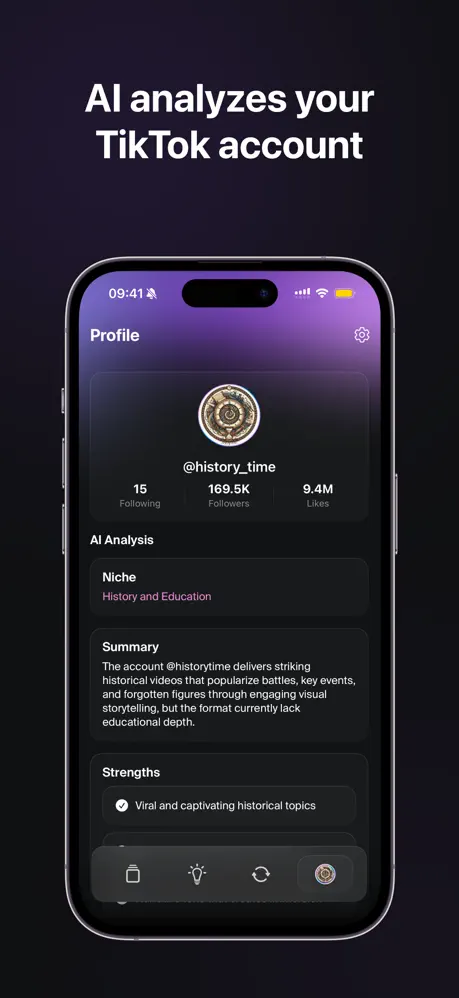
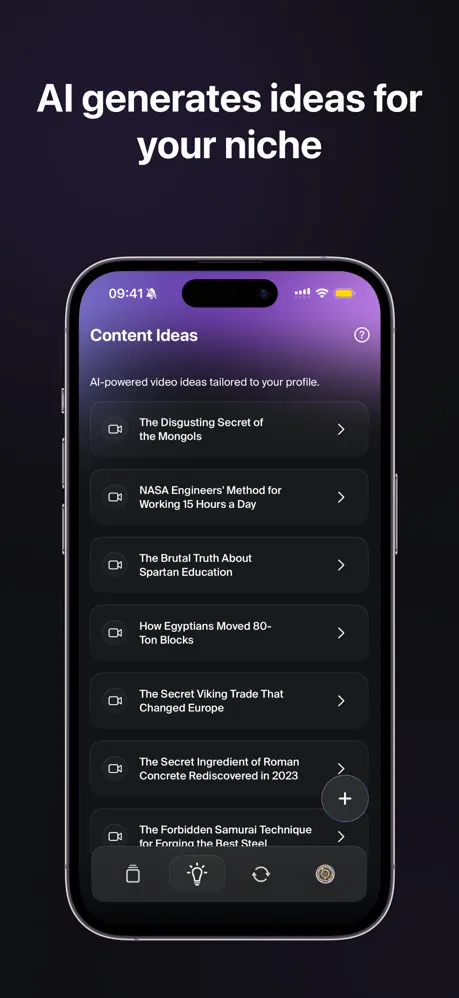
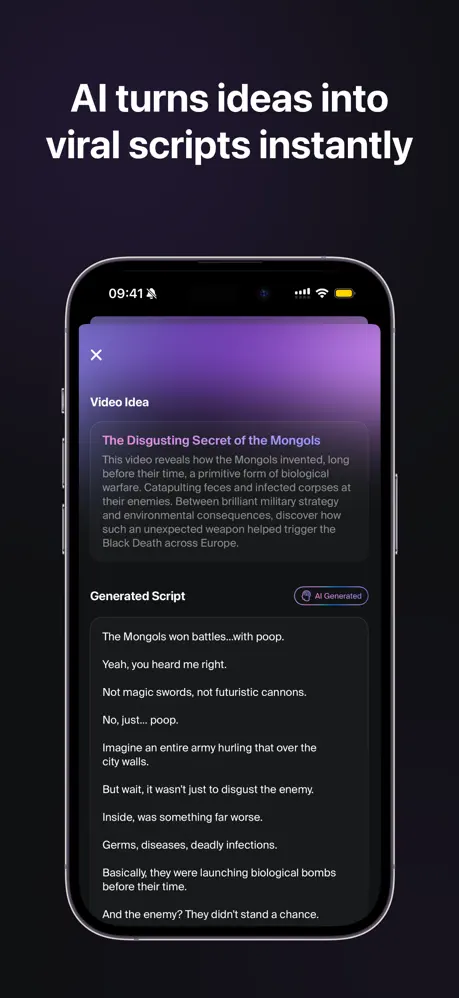
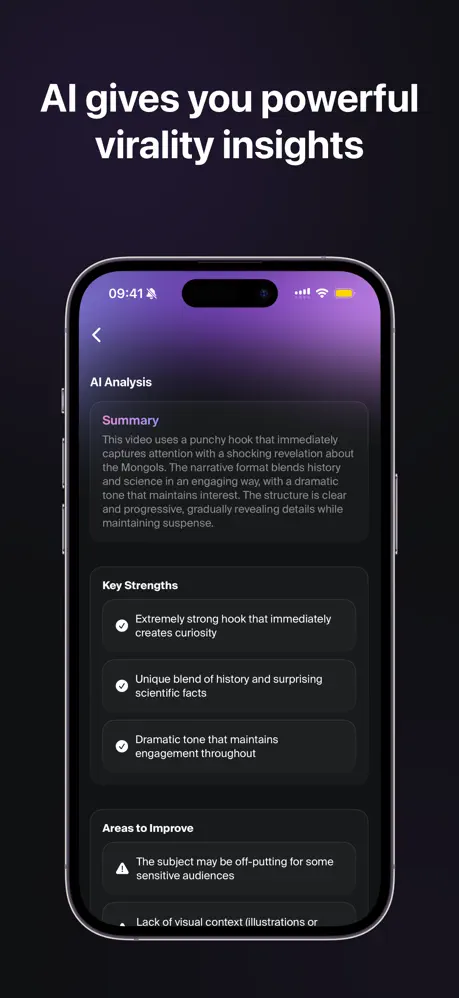
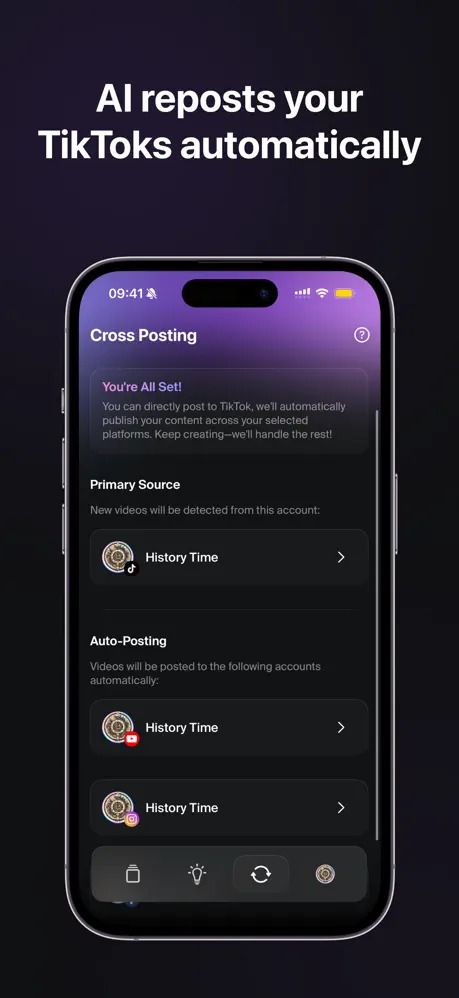
Blow Up is an AI app for creators who want to improve their TikTok content. A user can share a TikTok video to Blow Up, analyze the account and content, and get recommendations for increasing reach.
The product is unusually well suited to organic marketing because its core action can be demonstrated inside a TikTok. In one of Enzo's formats, the creator shows viewers how to share a video to Blow Up for analysis. Viewers naturally try the same action themselves.
That creates a useful loop: the content demonstrates the product, the CTA feels like part of the tutorial, and the viewer's interaction with TikTok may send a positive engagement signal to the platform.
Enzo's team also uses formats where two videos appear at the top of the screen while a creator delivers a prepared script below them. When they launched this format in Germany, the first video reached roughly 300,000 to 400,000 views.
The creator changed. The country changed. The format still worked.
How much does Enzo's app business make?
Enzo's app portfolio makes around $300,000 per month, with Blow Up generating nearly $250,000 in the month before recording. His team also scaled several other apps to around $100,000 per month.
This is not purely an organic business, but organic content is the main engine. Enzo estimated that paid ads contribute around 5% to 10% of revenue, while TikTok and Instagram creators drive the majority.
The economics vary dramatically by app and country. Blow Up operates in a category that Enzo says is difficult to convert. One million views might bring roughly 2,000 users. A fitness or calorie-tracking app can convert the same attention far more efficiently.
That is an important correction to the usual "views equal downloads" assumption. Reach matters, but the niche, product, market, and onboarding determine what each view is worth.
How does Enzo generate 250 million UGC views a month?
Enzo generates around 250 million views per month by separating format research from creator execution. His creators are not expected to develop the strategy. They receive a format and a script, then reproduce it precisely.
At first, the team gave creators more freedom. The results were inconsistent. Standardizing the format worked better.
One person on Enzo's team spends a large amount of time watching TikTok and looking for videos that are already performing. The team studies content inside its own categories, but it also looks outside them. A useful structure from another niche can often be adapted to an app.
The workflow is straightforward:
- Find a format already getting unusual reach.
- Identify the hook, visual structure, script, and CTA.
- Adapt the format so the app belongs naturally in the video.
- Give creators the exact script.
- Repeat the format across creators and countries until performance fades.
This is less romantic than asking everyone to be original, but it is far easier to scale.
How does Enzo find the right UGC creators?
Enzo looks for energy and consistency before follower count. He believes the format creates the reach, so the creator's job is to deliver it with enough presence and keep posting long enough to improve.
Motivation is the clearest signal. A creator who promises ten posts a day and disappears after one week is not useful. A creator who publishes one video every day, even when the early videos fail, can become a strong performer through repetition.
Existing audience size matters much less. Some of Enzo's French creators started with around 200 followers and grew to 100,000 followers in two months. TikTok and Instagram can distribute an individual video far beyond the creator's follower base.
To fill the pipeline, a member of his team sends around 400 targeted DMs per day. The outreach is handled through messages rather than introductory calls. The team generally prefers smaller creators because large influencers often demand fixed fees before proving that their content converts.
This is a volume funnel. Find people with the right energy, send enough relevant outreach, get them to publish the first video, and let consistent performance reveal the winners.
How does Enzo pay UGC creators?
Enzo pays most creators based on views instead of offering a fixed fee for every video. Around 80% to 90% of creators receive performance-based compensation with no base payment.
The exact CPM changes by market and format. Individual video payouts can also have a ceiling. Enzo described a recent video that reached 10 million views and cost the company roughly $500 to $600 because the payout was capped.
He combines that structure with cumulative bonuses. Creators can unlock cash, iPhones, iPads, MacBooks, and larger rewards as their total views increase. One creator received a car after passing 50 million cumulative views.
The car is memorable, but the more useful idea is the progression system. Every new post moves the creator toward a visible target. The company limits its downside on individual experiments while giving consistent creators a reason to stay.
Enzo uses different deals for established influencers. Those can include a flat fee, a smaller base payment plus bonuses, or milestone payouts. The compensation model follows the creator and the risk rather than forcing every partnership into one template.
Does TikTok or Instagram perform better for app growth?
TikTok and Instagram perform differently depending on the country and content format. Enzo does not treat one platform as the universal winner.
In the US, Instagram generated around 80% of his revenue at the time of recording. Reaction-style content works well there: the creator reacts to something on screen, then demonstrates a feature from the app.
In France, direct face-camera videos perform better. The creator speaks to the viewer and explains the app or feature more explicitly.
The practical lesson is to test platform, market, and format together. A format that wins on US Instagram may fail on French TikTok, even when the product is identical. Localization is not just translating the script. It means matching the way people in that market consume content.
How does Enzo track organic views, downloads, and revenue?
Enzo tracks organic performance by country, creator, and timing, but he is direct about the limitation: organic attribution is still imperfect.
His team uses Viral to track creator output and views. Then they compare large view spikes with app downloads and revenue in the countries targeted by that content. If views spike without a corresponding increase in users, the video reached the wrong audience or failed to connect the entertainment to the product.
This is closer to informed correlation than precise user-level attribution. But at Enzo's volume, the large movements are visible enough to make decisions.
The important metric is not views alone. It is whether a format repeatedly creates a measurable business response.
What app growth playbook does Enzo repeat?
Enzo repeats a product funnel built around a long emotional onboarding, immediate value, and a hard paywall without a free trial.
In Blow Up, onboarding takes roughly five minutes. The app asks questions, opens TikTok to analyze the user's account, returns smoothly to Blow Up, and gives personalized feedback before presenting the paywall. The user experiences part of the product's value before being asked to pay.
Enzo says his team spends about as much time on onboarding as it does on the rest of the app. That investment paid off. A recent onboarding rebuild increased both conversion and revenue by around 50% without adding more traffic.
The team A/B tests onboarding and pricing while splitting traffic concurrently. That matters for organic acquisition because traffic quality can change from one viral video to the next. Comparing different weeks can produce a false winner if one week simply had better content.
Conversion also varies by market. Blow Up typically converted around 4% to 5% of French downloads into subscriptions, with stronger days reaching 10%. In the US, conversion was usually around 10% to 12% and sometimes reached 30%.
The same funnel can produce very different economics depending on who arrives.
Why does Enzo advertise features before building them?
Enzo sometimes runs organic videos or paid ads for features that do not exist yet. He uses the response as a demand test before committing development time.
When a video performs and users contact support asking where the advertised feature is, the team treats that frustration as a strong signal. People did not merely like the idea. They downloaded the app and actively looked for it.
Only then does the team prioritize building the feature.
This approach has an obvious cost: the first users do not receive what the creative promised. It needs to be handled carefully. But as a product discovery method, it gives Enzo evidence that is much stronger than an internal brainstorm or a survey answer.
The broader principle is useful even without promoting unfinished functionality: test the message cheaply before investing heavily in the implementation.
What is a web-to-app funnel?
A web-to-app funnel lets a user complete onboarding and pay on the web before downloading and opening the mobile app. Enzo's web-to-app funnel generated around $30,000 per month at the time of recording.
The web flow mirrors the app's onboarding. It analyzes the user's account, asks the same questions, presents a web checkout, and then sends the customer to the App Store. When the app opens, the customer can be signed into the paid account automatically.
This has two financial advantages. The business uses its own payment flow instead of an in-app purchase, and the cash becomes available faster for reinvestment. For App Store revenue, Enzo also uses a financing platform that advances a large share of expected proceeds weekly instead of making the company wait for Apple's normal payout cycle.
For a business scaling creator spend, cash timing matters. A profitable channel can still grow slowly when revenue arrives long after the acquisition expense.
How should a founder start UGC with no team or budget?
A founder with no UGC team should learn to make content personally before trying to delegate it. Enzo believes you cannot coach creators effectively until you understand what producing and iterating on the videos actually requires.
"You can't find UGC if you don't know how to do content."
Publishing your own videos also creates social proof. Creator outreach is easier when you can show that the format already works and that previous creators grew their accounts with it.
The order matters:
- Learn by making the content yourself.
- Find one format that repeatedly earns views.
- Document the hook, script, visual structure, and CTA.
- Use those results when recruiting the first creators.
- Scale outreach only after you have something worth joining.
Sending 400 DMs a day without a proven format produces a larger pile of rejection. Distribution has to work before it can be delegated.
What is Enzo's #1 advice for new app builders?
Enzo's main advice is to begin with a viral niche and content format, then build an app that fits inside the distribution. He would not start his next app by copying another product and searching for marketing afterward.
Instead, he would find a subject already getting attention, reproduce the format himself, and confirm that it can generate views. Only then would he build the app and place it naturally inside that format.
"You need to think about views equal money. If you get views but don't get money, improve your product, your onboarding, and your paywall."
The statement is deliberately simple. Views are not revenue by themselves, but they prove that distribution exists. If attention does not turn into money, the next bottleneck is easier to locate: audience quality, product, onboarding, pricing, or paywall.
Enzo's system starts in reverse. Prove the path to attention. Build for that path. Then improve the economics behind it.
More episodes
See all episodes →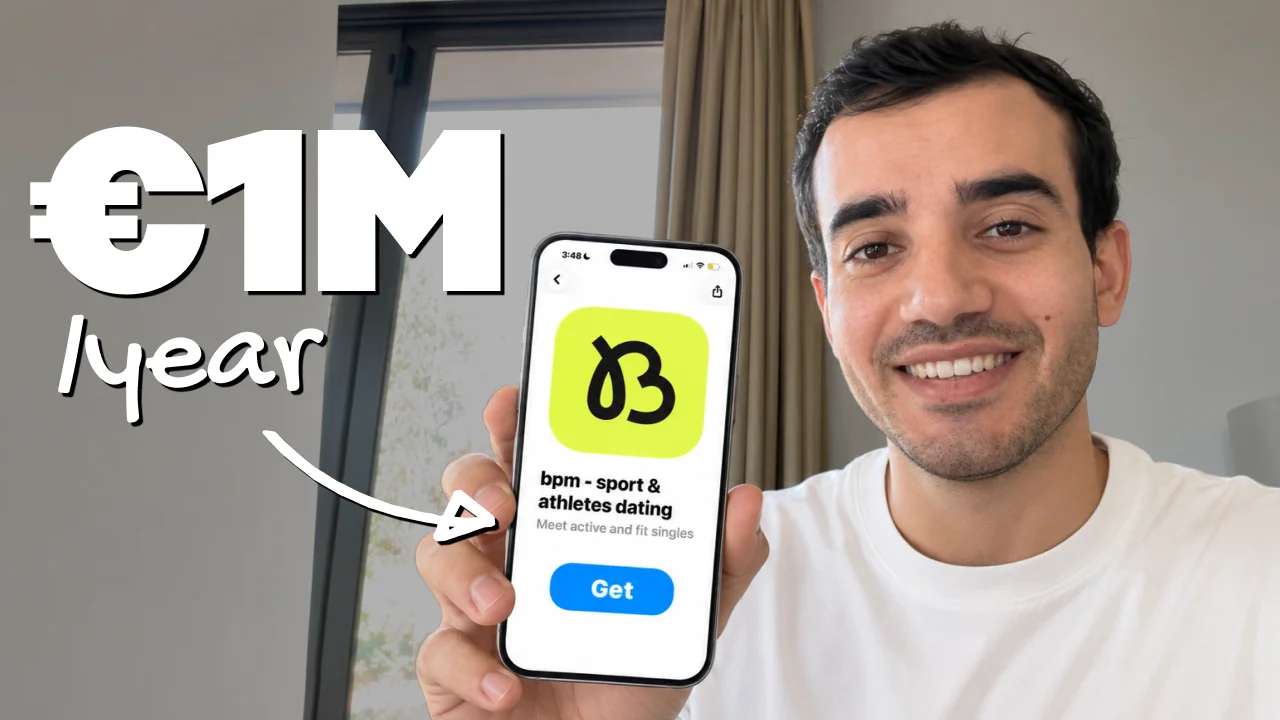
I Built a €1M/Year Dating App in 4.5 Months
Gabriel Zeitoun explains how BPM reached €1M in annualized revenue in 4.5 months through a run club, premium features, and Meta ads in France.
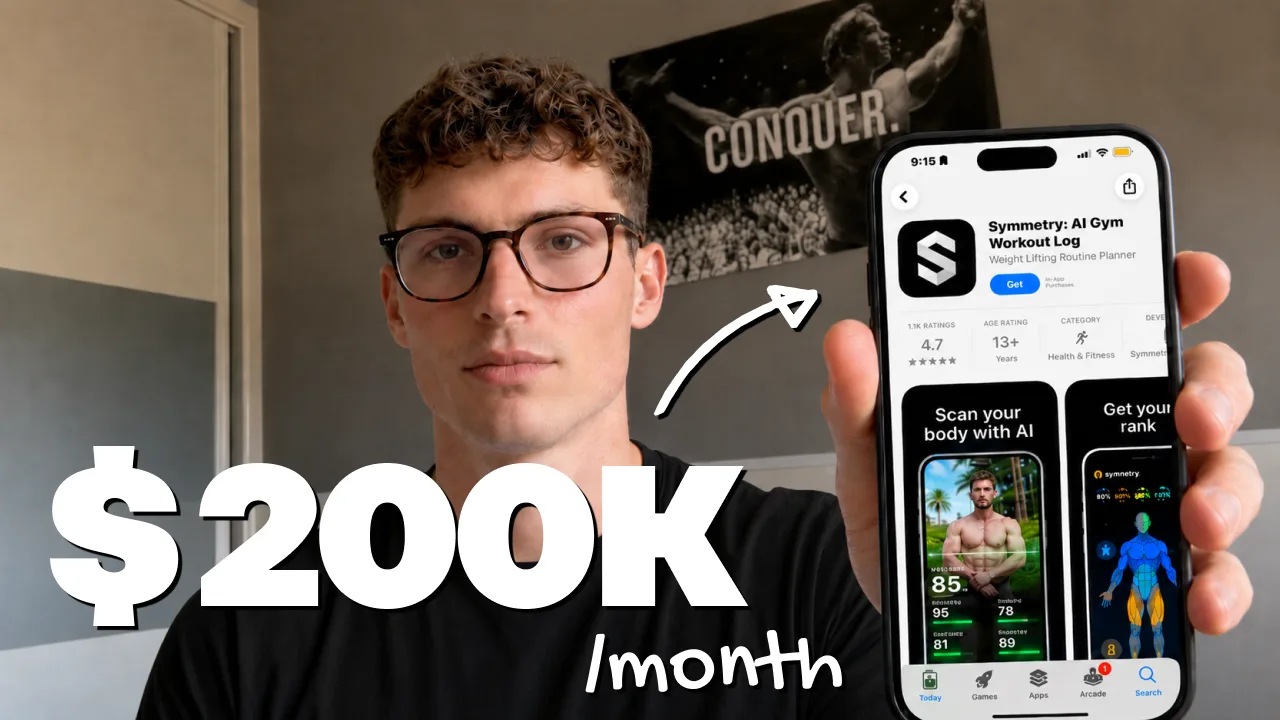
I Got 1 Billion Views For My App With No Ads
Mauro Botanes explains how Symmetry reached $200K/month, 2M downloads, and nearly 1B organic views by building a creator machine instead of running ads.
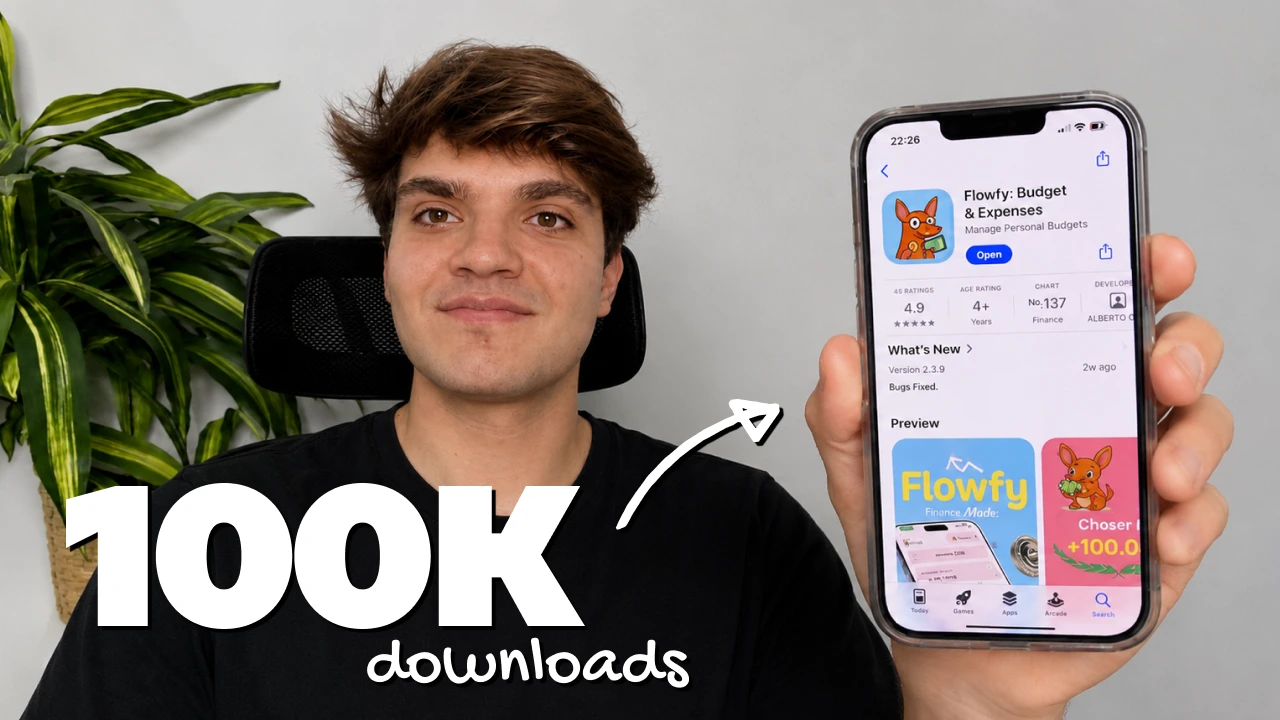
100,000 App Downloads From TikTok Slideshows
Alberto Pérez explains how he gets 5M TikTok views a month, 100K app downloads, and $8K/month from simple TikTok slideshows. No paid ads, no UGC, no video content.