I Built a €1M/Year Dating App in 4.5 Months
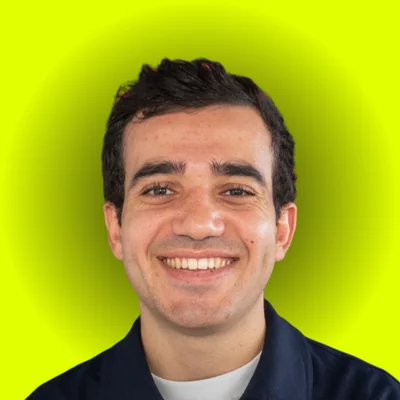
Gabriel Zeitoun started with a run club for singles in Paris. His dating app, BPM, went on to reach €1M in annualized revenue in 4.5 months, operating only in France.
TL;DR: BPM's early growth combined a community built before launch, a free experience with paid upgrades, and Meta ads scaled gradually. Gabriel explains how he brought the first users into an empty dating app, protected profile quality, and used a reported 14-day ad-spend payback to support growth. The €1M figure is an annualized revenue run rate, not revenue already earned over a full year.
Who is Gabriel Zeitoun?
Gabriel Zeitoun is the founder of BPM, a dating app for active singles. Before launching the app, he organized a run club for single people in Paris to build the community the product would need.
The app was always the plan. The run club gave him a way to start without having to fund a large consumer launch from day one. People met, relationships formed, and he could see that the idea worked outside a pitch deck.
He has also shared the origin of BPM Run Klub in his own account of the launch.
For a dating app, that early community was more than an audience to market to. It was the beginning of the product itself.
What is BPM?
BPM is a dating app for singles who share an active lifestyle. Sport gives members a common interest and a reason to meet, whether that means running, going to the gym, or another activity.
Its positioning is deliberately specific. Gabriel is not trying to build a dating app for everyone. He wants a community where being active is part of what makes two people compatible.
That focus carries through the onboarding and profile review process. Getting more installs matters, but so does making sure the people joining are a good fit for the experience.
The app is available on the App Store and Google Play.
How much revenue does BPM make?
BPM reached a €1M annualized revenue run rate in 4.5 months, operating only in France, as shared in the Tap & Swipe interview.
Annualized revenue describes the business's revenue pace projected over a year. It does not mean BPM collected €1M during those 4.5 months, and it should not be confused with profit or automatically labeled annual recurring revenue.
The app began monetizing about a month after launch. Gabriel introduced subscriptions on a Friday and says the business had already reached roughly €1,000 in MRR by the end of that first weekend.
Early revenue mattered because he was working with limited capital. He could not afford a long period of buying users without learning whether they would pay.
How do you launch a dating app with no users?
BPM reduced the empty-app problem by building a community before launch, bringing a waiting list into the app, and then supporting that first wave with small paid campaigns.
Gabriel makes a useful distinction between two kinds of apps. A calorie tracker can be valuable even if you are its only user. A dating app cannot: the people you can meet are a major part of what you came for.
"The product is actually the users."
By launch, BPM had a waiting list of around 4,000 people. Gabriel says it produced approximately 500 installs over the first weekend. The team then began spending around €20 to €50 per day on acquisition.
Those are different numbers for a reason. A waiting-list signup was not the same thing as an active profile. The launch still needed work to turn interest into enough people inside the app.
The run club gave Gabriel a practical starting point: a specific audience, in a specific place, already interested in meeting each other. He did not have to create that interest from scratch on launch day.
How does BPM monetize without making the free app useless?
BPM uses a freemium model: people can use the app for free, while subscriptions unlock features that make the dating experience more useful.
Gabriel identifies two main reasons users pay:
- Sending more likes. Free users have a limit, while premium users can express interest in more profiles.
- Seeing who liked their profile. A subscription reveals interest they would otherwise have to discover through the free experience.
There are other paid features, but he says these two drive most of the subscription revenue.
The distinction matters for a social product. Free members are not just potential customers. Their profiles also contribute to the experience for everyone else, including paying members.
BPM therefore keeps the free tier usable. The paid offer improves an experience people can already participate in, rather than blocking access before they can see why the community is worth joining.
How does BPM keep dating profiles trustworthy?
BPM began by reviewing every incoming profile manually. Gabriel wanted verified profiles and a consistent experience from the start, even when that meant spending time on work that would eventually need automation.
The team checked its back office for new profiles and reviewed whether each one appeared genuine. They looked for scammers, fake accounts, and poor-quality pictures that could hurt the experience for other members.
At times, they were handling up to 500 profiles a day. That became time-consuming, but Gabriel considered the work important enough to keep doing.
At the time of the interview, he said around 90% of the process was automated.
The lesson is specific to products where people encounter each other. A bad profile does not only affect one account. It becomes part of someone else's first impression of the app. BPM treated profile review as product work, not an administrative task to postpone.
How does BPM manage gender balance?
Gabriel describes acquiring enough women as the harder side of building BPM's dating community. His working target is roughly 60% to 70% men and 30% to 40% women.
That is the balance he aims for, not a claim about BPM's exact current ratio or a universal target for every dating app.
For a founder, the broader point is that aggregate installs can hide an unhealthy marketplace. A campaign might bring inexpensive users while doing little to improve the pool of potential matches for the people already there.
BPM has to think about who is arriving, not just how many people are arriving. Community composition affects whether the next user finds the app worth keeping.
How did BPM scale Meta ads from €50 per day?
Gabriel scaled Meta ads by checking that each spending level worked before increasing the budget. He describes the goal as spending the existing budget well, then adding more.
In the interview, he gives a sequence of €50, €100, €300, €500, and €700 per day. The changes were not automatic daily increases. He would spend a week, two weeks, or sometimes three weeks checking performance before deciding the next step was justified.
He was watching more than the budget. The creatives needed to work, and the team needed enough new creative output to support the higher spend.
Gabriel also reports a 14-day payback on ad spend, measured through net ROAS, early in the growth period. That helped him increase acquisition spending without waiting months to see whether the users would generate enough revenue.
The sequence is useful: prove the economics at a small budget, make sure creative production can support the next level, then increase spend and check again. His 14-day result describes BPM's experience, not a benchmark every app should expect.
Should Meta campaigns optimize for installs or subscriptions?
BPM runs campaigns optimized for installs, completed profiles, and subscriptions. Gabriel compares what they produce further down the funnel instead of assuming that one campaign objective always wins.
He started with install campaigns, then moved some spending toward a deeper event: a user completing onboarding and creating a profile. He also runs campaigns aimed at acquiring paying subscribers.
But he did not eliminate install campaigns entirely. Sometimes an install-optimized campaign produced a completed profile at a lower cost than a campaign explicitly optimized for profile creation.
That is the important comparison. The campaign label tells Meta what to optimize for, but Gabriel still checks the downstream result.
For BPM, the questions are: did the user finish creating a profile, did that profile add value to the community, and did the acquisition eventually generate revenue? A cheap install alone does not answer them.
Which onboarding metric matters most for a dating app?
Gabriel focuses on getting users through onboarding into completed profiles, while accepting that the process also filters out people who are not a fit for BPM.
When the company pays for an install and that person leaves during onboarding, some acquisition spend has failed to produce a member. Improving completion can therefore make the same budget go further.
But he does not view every exit as a design failure. Someone might reach the screens about sport and realize the app is not for them. Gabriel sees that as a different problem from an interested user abandoning a confusing flow.
For BPM, a higher completion rate is valuable when it creates more relevant profiles. Removing every point of friction without considering who gets through could weaken the community the app is trying to build.
The practical takeaway is to read onboarding numbers alongside audience fit and later behavior, rather than optimizing the completion percentage in isolation.
Do video ads or static ads work better for BPM?
BPM had used video ads exclusively at the time of the interview. Gabriel had not yet tested static ads, so he could not say video had beaten them in a comparison.
He wanted to add statics. His reasoning was that a person might encounter a still image, later see a video, and become more familiar with the app through those different exposures.
This is an important distinction when borrowing another founder's strategy. Video worked for BPM. That does not establish that static ads would fail, or that every dating app should use video only.
The proven part of his process was finding creatives that supported the current spend and making enough of them to keep testing as budgets grew.
What is Gabriel's advice for someone building their first app?
Gabriel recommends building something narrow, keeping the first version simple, and testing it before spending too much time polishing it.
"Don't try to put everything into your app just because you can."
His advice is to focus on one feature for a specific need. A targeted app is easier to understand and test than a broad product assembled from every idea the founder could implement.
He also warns against delaying the test until every screen or paywall is perfect. The first version needs to help you learn whether people want the product.
BPM's own story shows what that can look like before software. Gabriel wanted to help active singles meet. The run club let him test that idea, build trust, and gather an initial community before asking people to download an app.
More episodes
See all episodes →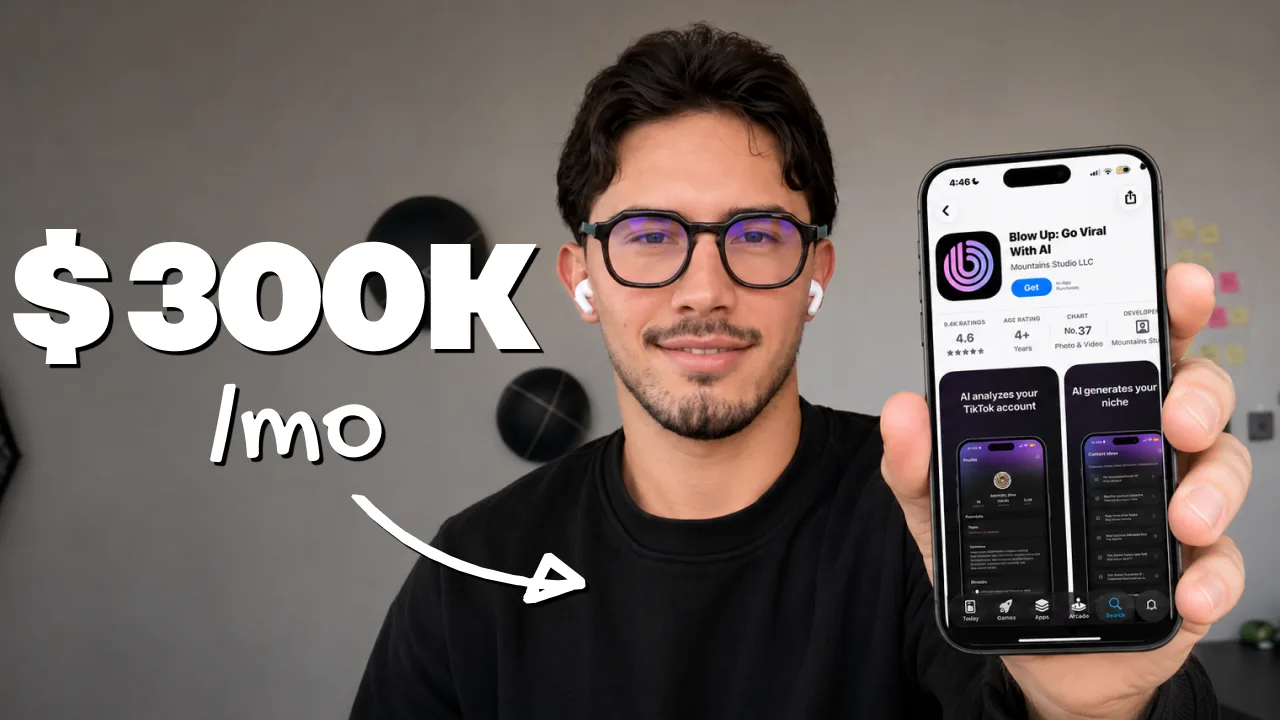
I Built a $300K/Month App Business With UGC
Enzo explains how he built a $300K/month app business with UGC creators, 250M monthly views, repeatable formats, and performance-based pay.
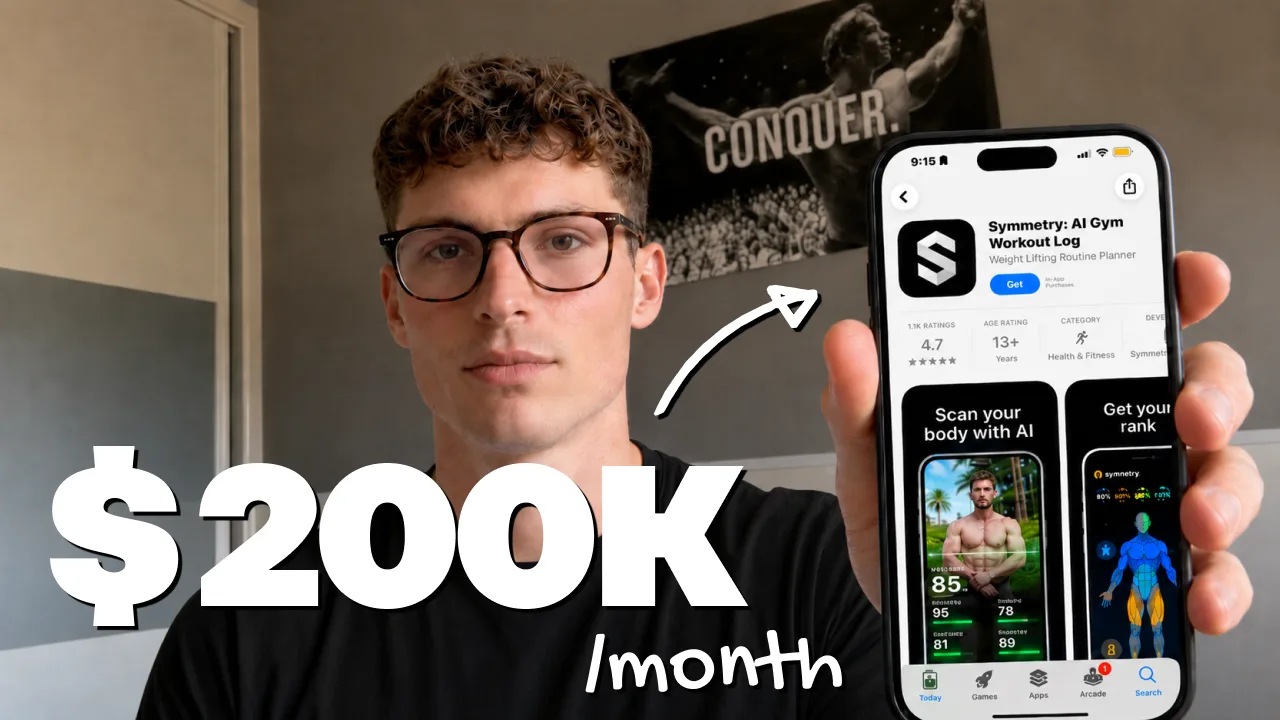
I Got 1 Billion Views For My App With No Ads
Mauro Botanes explains how Symmetry reached $200K/month, 2M downloads, and nearly 1B organic views by building a creator machine instead of running ads.
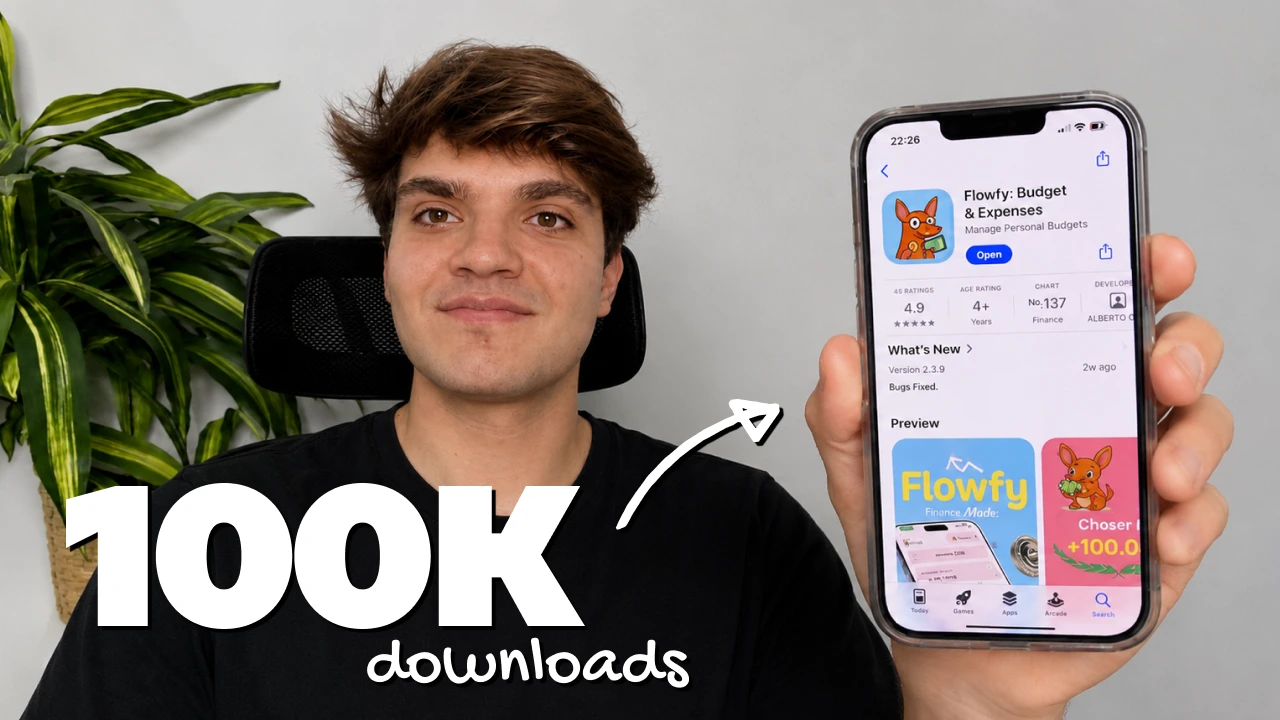
100,000 App Downloads From TikTok Slideshows
Alberto Pérez explains how he gets 5M TikTok views a month, 100K app downloads, and $8K/month from simple TikTok slideshows. No paid ads, no UGC, no video content.