I Got 1 Billion Views For My App With No Ads
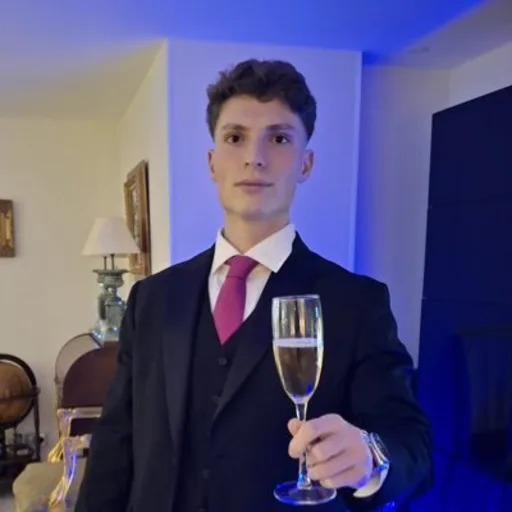
Mauro Botanes built Symmetry, a fitness app doing around $200K/month, with no ad spend. In the last 9 months, Symmetry got 2 million downloads and nearly 1 billion views from organic creator content.
Who is Mauro Botanes?
Mauro Botanes is the founder of Symmetry, a fitness app built for Spanish-speaking Gen Z gym users. Before scaling Symmetry, Mauro and the founding team already had experience growing personal brands on YouTube and social media. That mattered because organic content was not a mystery to them.
The app started with traffic from those personal brands. It worked, but it was not enough volume and it was not recurring enough. Then the team tested influencer marketing. That did not work well. When they tested UGC-style creator content, they finally found the channel that could scale.
The lesson is simple: Symmetry did not win because one viral video saved the business. It won because Mauro turned organic content into a repeatable operating system.
What is Symmetry?

Symmetry is an AI gym workout log and fitness app that helps users track workouts, scan their body, and improve their training routine. The product is built for people who already care about the gym, especially Spanish-speaking Gen Z users.
That focus is important. Mauro is not trying to make a generic fitness app for everyone. Symmetry's original ICP was clear: young Spanish-speaking gym users who understand fitness content, follow creators, and are willing to download an app when the content feels native to their world.
The app also matters because Mauro does not see marketing and product as separate things. If a creator can show a feature in a video and viewers instantly understand why it is useful, that feature becomes easier to distribute.
How much does Symmetry make?
Symmetry makes around $200,000/month, as Mauro shared on the Tap & Swipe podcast in July 2026. In the last 9 months, the app generated around 2 million downloads and nearly 1 billion organic views.
The surprising part is that this came without paid ad spend. Mauro did not scale by taking a winning TikTok and turning it into Spark Ads. He stayed organic because the team already had the skill of social media, and because organic creator content kept working.
His logic is practical. Paid ads are a different skill. If something is already working, do more of it until it stops working.
How did Mauro Botanes get 1 billion views with no ads?
Mauro Botanes got nearly 1 billion views for Symmetry by building a team of more than 50 creators who make organic content for the app. Instead of relying on one founder account, Symmetry created a creator machine.
At first, the team used their own personal brands to drive downloads. Then they started recruiting creators from their audience and from Symmetry users. Over time, they built a process for finding, testing, training, and paying creators based on performance.
Mauro's point is that most founders spend too much time thinking about the videos and not enough time thinking about the people making them.
"A lot of your energy and time should be spent here, not in the actual process of making videos, but finding the people that will make the videos."
That is the core of the playbook. Symmetry is not just making content. It is recruiting distribution.
How does Symmetry find UGC creators?
Symmetry finds UGC creators from three main sources: the founders' existing audience, people who already use Symmetry, and paid ads designed specifically to recruit creators.
Mauro treats creator recruitment like a funnel. The same way a B2B SaaS company tracks leads from first touch to closed deal, Symmetry tracks people through the creator hiring process. They look at each step, measure conversion, and improve the system.
The team does not care much about whether someone already has a big social media account. Previous follower count is not the main signal. Mauro cares more about intelligence, determination, taste, and willingness to work.
Candidates go through a challenge where they have to make a series of videos. The point is not just to see the final output. It is to see how seriously they take the task, how much effort they put in, and whether they can improve quickly.
After that, creators go through a trial period. If the working relationship is good, they join the team. If not, Symmetry keeps looking.
Why do Symmetry's top creators matter so much?
Symmetry's top creators matter because creator output follows a power law. Mauro said the top 5 creators outperform the other 45 creators combined.
That does not mean the other creators are useless. Some still make views, and because Symmetry pays based on results, there is little downside to keeping people who are improving. But it does mean that finding A-players is one of the highest leverage things the team can do.
"Finding these A-players, it's one of the best things you can do."
The best creators hit viral outcomes more often. There is always luck in social media, but some people create the conditions for luck much more consistently than others.
Mauro also uses culture to keep standards high. If someone is at the bottom and not trying to improve, they can be removed from the team. But if someone is not getting views yet and is clearly learning, Symmetry is willing to keep betting on them.
How does Symmetry pay its creators?
Symmetry pays creators using a CPM that changes every month based on how much the app made that month. Mauro said this keeps the business profitable while still giving creators upside when they perform well.
This is different from a flat fee or a capped bonus. There is no ceiling. If a creator generates a lot of views, they can make a lot of money. Mauro said some creators make $10K to $20K/month consistently.
That matters because the payment system shapes motivation. If you cap creators too aggressively, they have less reason to keep pushing. If you overpay without tying it to performance, the business gets fragile.
At the beginning, Symmetry was very generous and paid creators almost everything the app made. As the company grew, they lowered creator CPMs so they could invest more into product, developers, PMs, and design. But as ARPU improved, creators did not feel a big drop in what they earned.
The model is not "cheap UGC." It is aligned UGC.
Why did Symmetry start in Spanish-speaking markets?
Symmetry started in Spanish-speaking markets because the product, audience, and founder advantage were already aligned there. The app was built for Spanish Gen Z gym users, and the founders already had Spanish-speaking social media channels.
The ARPU in Spain or Mexico is lower than in the US. But Mauro's point is that creator costs and download costs are also lower. If the app can do more volume, the profit margins can still be attractive.
This is a useful reminder for app founders. The US is not always the best first market. A market where you understand the culture, language, content, and creators can be a better place to build momentum.
Mauro also believes the Spanish market is deeper than most people think. At first, he assumed there could not be that many Gen Z gym users in Spain. Then Symmetry kept making videos, kept getting downloads, and kept finding more demand.
For 2026, his goal is to dominate health and fitness in Spanish-speaking markets before expanding more aggressively.
How does Symmetry track organic creator performance?
Symmetry tracks organic creator performance by combining view spikes, download spikes, and in-app attribution questions. Mauro admits there is no perfect answer for organic tracking.
The practical method is correlation. If a creator has a viral video and downloads spike at the same time, the team can estimate how that content converted. From there, they can look at whether those users started trials, converted to Pro, or retained.
Symmetry also asks users inside the app where they came from. That lets the team segment users from TikTok and remove noise from family, friends, or other sources.
The most important signal is when views and downloads do not match. If a video gets huge reach but no download spike, something is wrong. Maybe the format is too entertaining but not connected to the app. Maybe the CTA is weak. Maybe the audience is wrong.
For Mauro, the goal is not generic brand awareness. It is product awareness that turns into app usage.
Why does Mauro avoid hard paywalls?
Mauro avoids hard paywalls because he is building Symmetry for the long term. He believes hard paywalls can make more money when the product is weak, but they are not the path to building a huge app.
His view is almost the opposite of the dark-pattern playbook many mobile app founders talk about. He is not trying to hide price, trap users, or maximize short-term trial starts at the cost of trust.
"People think they can make more money with a hard paywall and onboarding. That's true if you have a shitty product. But they are not thinking big enough."
Mauro wants Symmetry to make money because the product is good enough that people keep using it. He points to apps like Tinder, Duolingo, and Spotify. They are huge because the product became part of people's lives, not because the paywall tricked people once.
That is a harder path. It means years of product work, small improvements, user feedback, and retention. But that is the kind of company Mauro wants to build.
How does Symmetry collect product feedback?
Symmetry collects product feedback through a Discord community, user interviews, user surveys, and a public feature request wall inside the app.
Mauro says mobile app feedback is harder than web app feedback because the feedback loops are less natural. The people who join Discord are often power users, which means the feedback is useful but biased toward people who already love the product.
Surveys help fill the gap. Mauro recommends structuring the questions carefully and avoiding leading questions. He also recommends giving users something meaningful in exchange. Symmetry gives users Pro access for answering surveys because the ask is big.
The feature request wall is useful because patterns become visible. If many users request the same missing exercise or feature, the team can prioritize it. When the issue is fixed, that request slows down and a new pattern appears.
The bigger lesson: Symmetry uses both qualitative and quantitative feedback. The goal is not to blindly ship whatever one loud user asks for. The goal is to see patterns.
How should app founders balance marketing and product?
Mauro believes most early app founders should focus on marketing first because they need downloads before they can learn anything meaningful about the product.
Without enough users, you cannot really know if onboarding works, if people convert, if users retain, if refunds are high, or if the product has any pull. Marketing creates the feedback loop.
But once an app has enough downloads, the balance changes. If the product is bad, more marketing only exposes the weakness faster. That happened to Symmetry early on, so Mauro shifted more focus into building a better product.
His framing is useful:
"Marketing exists to fund the construction of a good product."
That is a healthier way to think about growth. Marketing is not a replacement for product. It buys the time, data, and money needed to make the product better.
How does Symmetry test new content formats?
Symmetry tests new content formats with a mix of exploitation and exploration. When a format works, the team makes more of it. But they also reserve energy for finding the next format before the current one dies.
Mauro uses the computer science language of exploration and exploitation. Exploitation means doubling down on a proven format. Exploration means testing new trends, new hooks, and ideas from other niches.
There is no secret shortcut. The team has to watch the market, scroll TikTok and X, study what is working, and ask whether a format can be adapted to Symmetry.
Then they test at volume. If a new format looks promising, they might make 100 videos around it in a week. If it works, they scale it. If it does not, they iterate.
For founders, the key is not to wait for the perfect original idea. Copy working formats from other apps, adapt them to your product, and learn from volume.
What is Mauro Botanes's #1 tip for new app builders?
Mauro's main advice for new app builders is to start by solving a problem you personally have. If you are your own ICP, you understand the user better and can build the first version for yourself.
He also wants founders to keep their ambition. There are two paths in mobile apps. One is to build an app with a strong onboarding, a hard paywall, and make money from short-term conversion. Mauro says that path is valid.
But he does not want that playbook to shrink people's dreams. If you want to build an app that helps millions of users, he believes you can work toward that too.
For organic growth, his advice is to start small. Open TikTok yourself. Post videos yourself. Copy formats from other apps. Learn how the algorithm behaves before trying to manage creators.
Once your own content starts bringing downloads and you know the app can convert, then start delegating. Hire friends. Test creators. Build a process. Scale from there.
More episodes
See all episodes →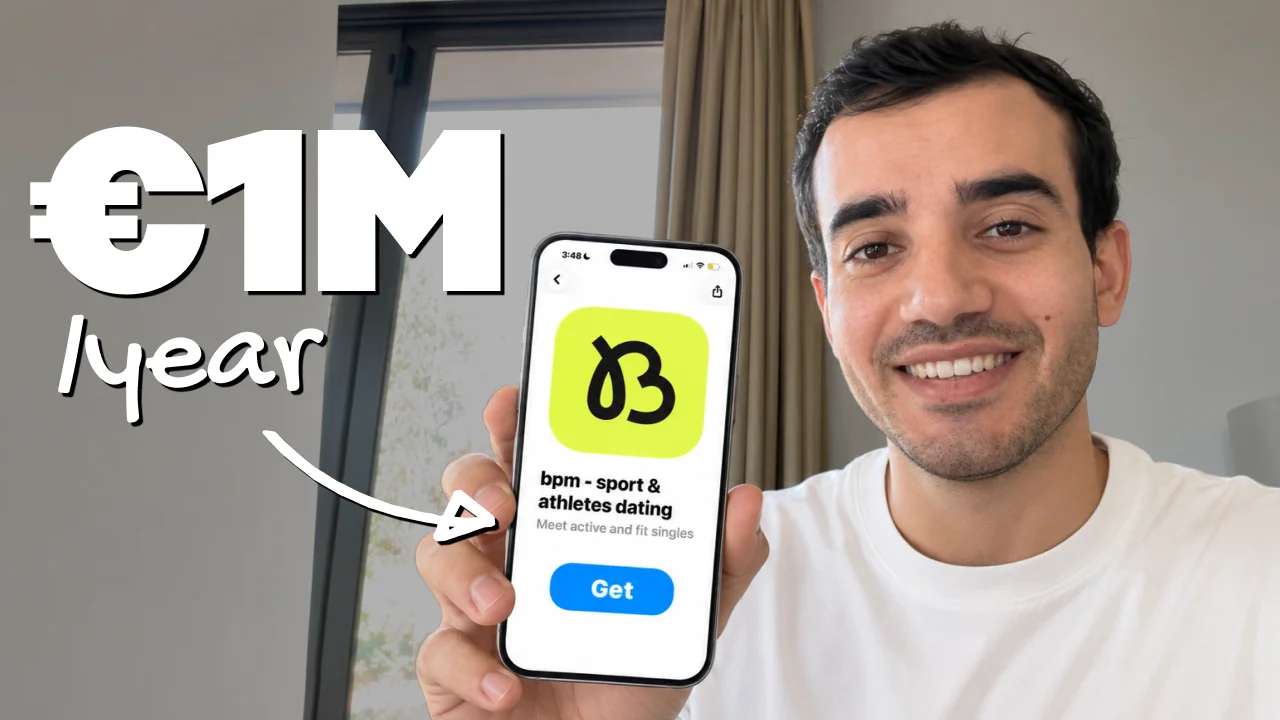
I Built a €1M/Year Dating App in 4.5 Months
Gabriel Zeitoun explains how BPM reached €1M in annualized revenue in 4.5 months through a run club, premium features, and Meta ads in France.
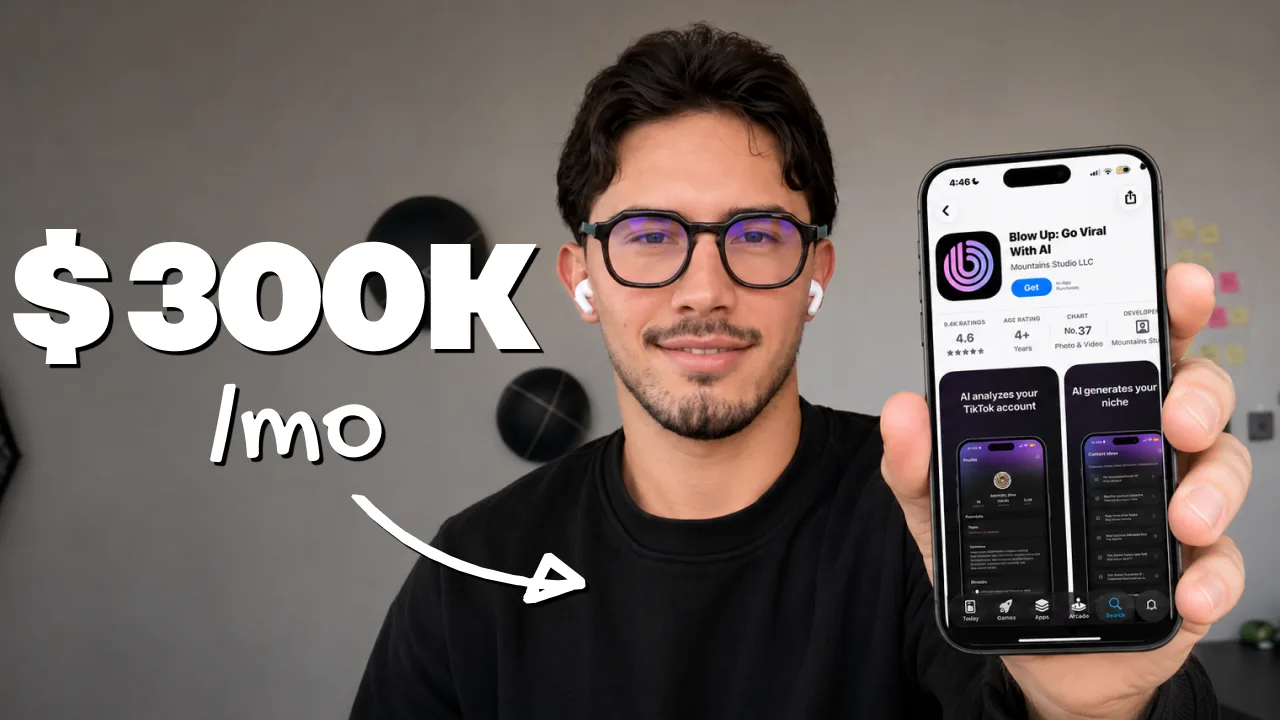
I Built a $300K/Month App Business With UGC
Enzo explains how he built a $300K/month app business with UGC creators, 250M monthly views, repeatable formats, and performance-based pay.
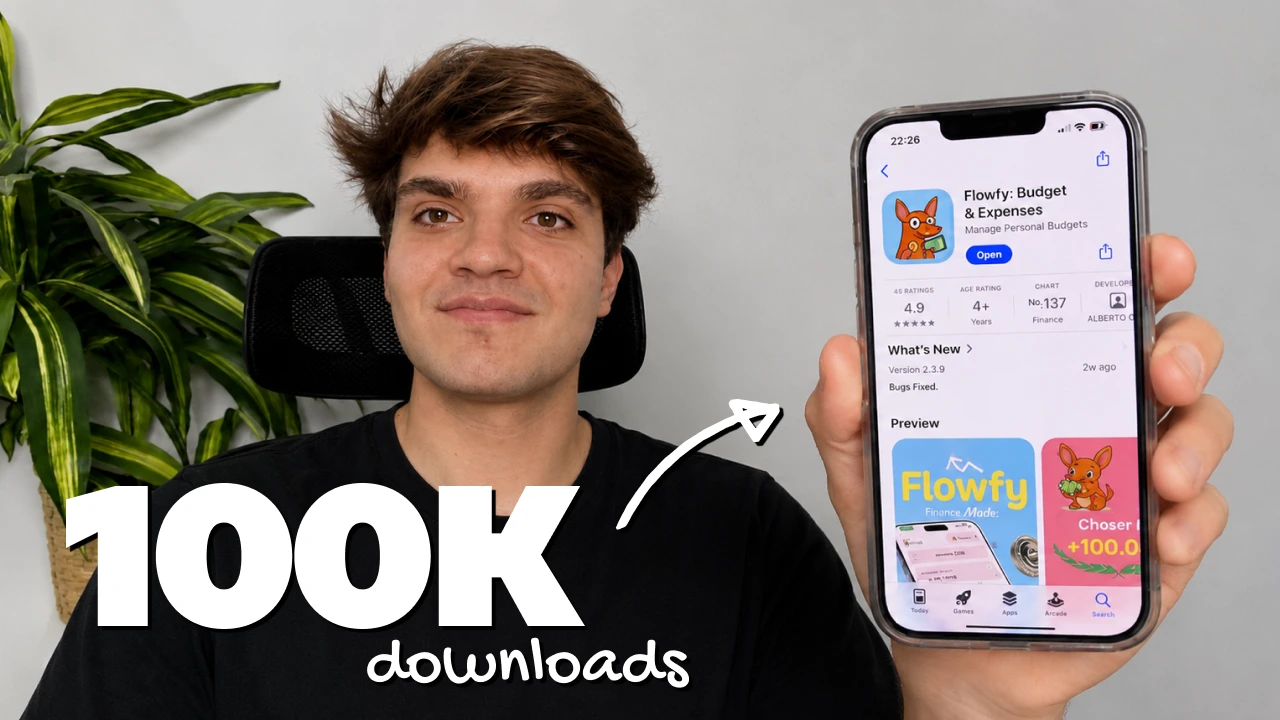
100,000 App Downloads From TikTok Slideshows
Alberto Pérez explains how he gets 5M TikTok views a month, 100K app downloads, and $8K/month from simple TikTok slideshows. No paid ads, no UGC, no video content.